The Missing Layer in Digital Health
The first edition of The HealthIMPACT Brief, a new editorial series amplifying the conversations happening on the stages and in the hallways of healthcare’s best events.
An action plan from the Digital Health Innovation Summit for health system leaders who could not be in the room.
I found myself thinking about the Digital Health Innovation Summit in Boston well after it ended, and Jason Green and the entire team at Cambridge VIP deserve the credit. As someone who spends much of the year thinking about event curation and storytelling through HealthIMPACT Live and Digital Health Talks, I appreciated how intentionally the conversations connected across the day. I only had the chance to attend the second day, and I got more out of it than I have at a single day of any of the bigger shows I’ve attended this year.
In the morning, investors framed the economic tension in digital health. The longevity panel explored how quickly the science is moving toward real clinical application. The operators translated those ideas into the realities of care delivery and reimbursement. By the final AI discussion, the day had collectively surfaced a larger strategic question that sat underneath every conversation.
The good news is that healthcare may finally have the science, technology, and operational models required to move prevention and longitudinal care from theory into practice. What it still lacks is alignment between incentives, workflows, reimbursement, and infrastructure.
That gap is becoming the next major opportunity in digital health.
The opportunity is not another standalone app, AI feature, or monitoring tool. It is the integration layer that connects emerging science, digital infrastructure, patient behavior, and financial incentives into something operationally sustainable.
Across the diverse panelists of investors, operators, scientists, and founders, the recurring theme was not whether the future of care will become more preventive, personalized, or digitally enabled. The question was whether health systems and their partners could build the economic and operational frameworks required to support that transition at scale.
Investors are becoming more selective about what actually works
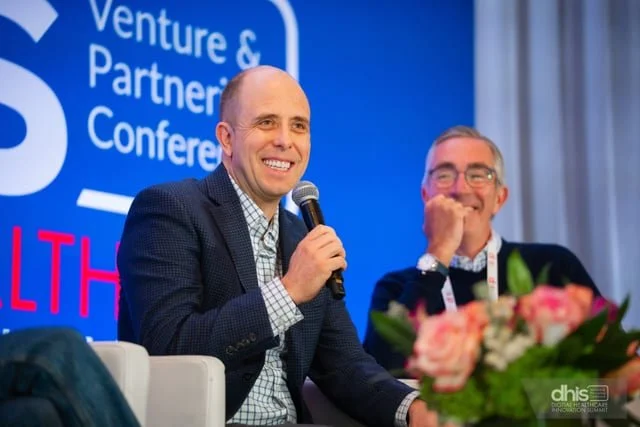
Capital at the Crossroads: Services vs. Tech in Healthcare Investment. Panelists: Alyssa Reisner (CVS Health Ventures, moderator), Katerina Fialkovskaya (Philips Ventures), Dave Fielding (Rubicon Founders), Steve Kraus (Bessemer Venture Partners), Candace Richardson (General Catalyst), Ben Wanamaker (General Atlantic).
The morning investor panel reflected a market that has become significantly more disciplined after several years of aggressive digital health funding.
Steve Kraus of Bessemer Venture Partners framed the challenge bluntly when discussing value-based care economics. Venture investors, he argued, have struggled to generate strong returns from many businesses built explicitly around value-based reimbursement models. The exits investors hoped for have been limited, and many digital health companies remain difficult to scale profitably.
Whether or not one agrees with the conclusion, the implication for health systems is important: many digital health vendors are operating in a financing environment increasingly skeptical of the very payment reforms many provider organizations are pursuing.
Ben Wanamaker of General Atlantic offered a more practical framework for evaluating healthcare technology companies:
Does the solution improve access?
Does it improve care delivery?
Does it reduce cost?
Does it create meaningful patient engagement?
His broader point was equally important. AI alone is not a business model. Many healthcare companies now incorporate AI, but few have established durable advantages that incumbents cannot replicate or absorb over time.
Candace Richardson of General Catalyst added another warning that surfaced repeatedly throughout the day: reimbursement uncertainty and tightening capital markets are likely to accelerate consolidation across digital health. For health systems, vendor durability is becoming a strategic consideration, not simply a procurement detail.
Dave Fielding of Rubicon Founders provided an important counterweight. While value-based care may present challenges for venture economics, he argued that risk-based care delivery models have produced meaningful operational and clinical outcomes when executed by organizations that understand the realities of care delivery.
Taken together, the panel exposed a growing disconnect between where healthcare financing is headed operationally and where many investors remain comfortable deploying capital.
For health systems evaluating technology partners, that disconnect matters a lot.
Longevity science is moving closer to clinical reality

The Business of Longevity and Healthspan Through Digital. Panelists: Stephen Klasko (moderator), Nir Barzilai (Academy for Health and Lifespan Research), Geoff Cook (Noom), Jake Donoghue (Beacon Biosignals), Maya Said (Outcomes4Me).
The longevity panel highlighted how quickly preventive and personalized medicine are evolving from consumer wellness concepts into clinically relevant infrastructure.
Nir Barzilai of the Academy for Health and Lifespan Research discussed emerging research into organ-specific aging patterns, including work published in Nature examining plasma proteomics and biological aging across multiple organ systems. The broader implication is that aging may eventually be measured more precisely and in more individualized ways than by chronological age alone. Barzilai also offered the cleanest argument I heard all day against single-fix prevention thinking: statins prevent you from having heart attacks, so you get Alzheimer's first. We optimize one organ at the cost of another and call it prevention.
The science itself is significant. The operational challenge may be even larger.
Healthcare systems still lack the workflow, reimbursement, and clinical decision-support infrastructure required to absorb many of these emerging biomarker-driven models into routine care.
Stephen Klasko of General Catalyst, the distinguished moderator, mentioned that gap and recalled earlier efforts by J. Craig Venter and Human Longevity Inc., which attempted more than a decade ago to combine genomic sequencing, advanced imaging, biomarker analysis, and machine learning into early disease detection models. The science was ambitious, but the infrastructure surrounding it was not mature enough for widespread clinical adoption.
Several panelists suggested that the surrounding infrastructure may finally be catching up.
Jake Donoghue of Beacon Biosignals discussed the use of sleep EEG signals in neuropsychiatric care, particularly around treatment-resistant depression. The potential value proposition is not simply better diagnostics, but faster treatment optimization and reduced trial-and-error prescribing.
Geoff Cook of Noom focused on GLP-1 therapies and their broader implications for preventive care and long-term health management. Multiple speakers referenced growing evidence that GLP-1 medications may influence not only weight management but also cardiovascular and metabolic outcomes.
At the same time, adherence remains a major unresolved issue. Real-world discontinuation rates for GLP-1 therapies remain high, particularly outside tightly managed clinical programs. That creates a significant opening for longitudinal engagement models, remote support systems, coaching infrastructure, and integrated chronic care management.
In other words, the medication itself may not be the primary long-term opportunity. The surrounding support ecosystem may be.
Dr. Klasko repeatedly returned the discussion to equity and accessibility. Many longevity-oriented services today remain concentrated among affluent, highly engaged consumers. If preventive medicine remains structurally inaccessible to large portions of the population, its broader system-level impact will remain limited. Klasko also captured the patient agency dynamic with a line that made the room laugh and made a real point: "Claude knows me better than anybody other than my wife." AI assistants are filling the integration gap that the system has not.
That tension surfaced repeatedly throughout the day: healthcare increasingly possesses the scientific capability to intervene earlier, but still struggles to operationalize those interventions equitably and sustainably.
Health systems are already redesigning care around hybrid delivery

The Digitally-Enabled Health System: Rebuilding Care Delivery for a Hybrid Future. Panelists: Molly McColl (Advocate Health, moderator), John Broach (UMass Memorial Health), Jatin Dave (UPMC Health Plan), Boris Lipchin (Junction), Dan Shields (Ochsner Health).
By the afternoon, the operational discussion became more concrete.
The digitally enabled health system panel focused less on speculative innovation and more on how care delivery is already changing inside large organizations.
Boris Lipchin of Junction set the cultural frame for the conversation: "If I say I went to the hospital, people say I'm sorry. If I say I went to the gym, congratulations." Health systems have been built around the absence of disease, and the patient experience reflects that posture. You cannot solve experience downstream of disease economics. You have to align the incentives upstream.
Dan Shields of Ochsner Health challenged the notion that digital programs should exist as add-ons to traditional care delivery. Large portions of routine chronic disease management, he argued, no longer require repeated in-person visits when remote monitoring, asynchronous communication, digital coaching, and AI-supported workflows can manage many patients more efficiently between appointments.
The implications are substantial.
A typical primary care panel includes large numbers of stable hypertension, lipid management, and chronic disease patients who may not require frequent office visits. If portions of that management shift into digitally enabled longitudinal care models, health systems can potentially redirect scarce clinical capacity toward higher-acuity and underserved populations.
John Broach of UMass Memorial Health emphasized that patients spend only a tiny fraction of their lives physically inside clinical environments. Most health behaviors, disease progression, and preventive opportunities occur outside hospital walls.
Moderator Molly McColl of Advocate Health discussed how before greenlighting brick-and-mortar, they must exhaust virtual assets, then hybrid assets, then physical assets. Ambulatory first. That is the operational reframe most systems have not made yet, and it has to be hardwired at the planning layer to actually hold.
Jatin Dave of UPMC Health Plan highlighted the reimbursement mismatch that continues to complicate many digital care programs. Remote monitoring reimbursement often compensates for data collection rather than for the broader care coordination work that data enables. Preventive digital programs can still create copays, administrative friction, and financial disincentives for patients.
That tension creates the central economic problem underneath much of digital health.
Under fee-for-service economics, successful prevention programs can reduce utilization and weaken near-term revenue streams for provider organizations. Under risk-based or capitated models, the same programs can become financially advantageous by reducing avoidable downstream costs.
Both realities currently coexist across much of the healthcare system.
That may be the central operational challenge facing digital health today: many organizations are attempting to build preventive, longitudinal care infrastructure while still operating inside reimbursement structures historically designed around episodic utilization.
The next winners will be the companies that connect fragmented systems
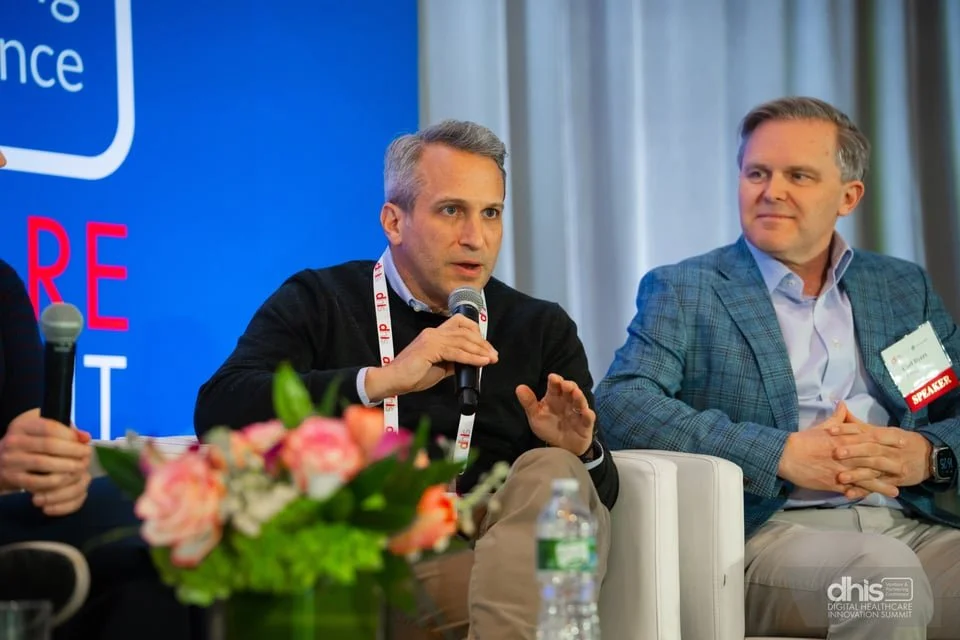
Beyond the Buzz: What's Next for Generative AI in Health and Care. Panelists: Michelle Snyder (McKesson Ventures, moderator), Carl Byers (F-Prime), Julia Hu (Lark), Jared Kesselheim (Transformation Capital), Mark Michalski (Deerfield), Allison Santoro (Biogen).
The final panel shifted to a broader question: which companies are most likely to endure as healthcare AI and digital infrastructure continue to evolve?
Carl Byers of F-Prime Capital framed it as the Indiana Jones theory of entrepreneurship. Indiana Jones figured out the Nazis were digging in the wrong place. In venture, you are looking for good ideas that seem like bad ideas, founders with a unique perspective on a problem the market has framed wrong. But knowing where to dig is not enough. Indy got the Ark, and the Nazis just took it from him. The companies that endure combine both: the right dig site and the moat to defend it.
Many healthcare AI products today are functionally features rather than enduring platforms. Application development alone is unlikely to remain a durable moat as foundational AI capabilities become more widely accessible.
That observation connected back to the broader themes emerging throughout the day.
The real opportunity may not lie in isolated point solutions. It may lie in building the connective infrastructure between:
Reimbursement and prevention
Biomarkers and workflows
Remote monitoring and intervention
AI and clinical operations
Patient behavior and longitudinal engagement
Healthcare increasingly has the components required for more preventive and personalized care. What it still lacks is the operational integration layer capable of coordinating those components at scale.
Patients, meanwhile, are increasingly assembling portions of that integration themselves through consumer technology, wearables, AI assistants, pharmacy platforms, and direct-to-consumer health services.
The healthcare system is no longer the sole organizer of the patient experience.
What health system leaders should take from this moment
For the C-suite leaders who could not be in the room, here are four moves to take into Monday's leadership meeting.
1. Align your digital and reimbursement strategies. Health systems moving toward risk-based care need technology partners designed for longitudinal prevention, engagement, and operational efficiency rather than utilization maximization. If your contracts are moving toward risk and your vendors are pricing for fee-for-service, you have a strategic mismatch hiding in your procurement queue. Address it before your CFO does.
2. Make vendor durability a procurement criterion. Many digital health categories remain crowded, reimbursement pathways remain uneven, and consolidation is likely to continue. Evaluate not only whether a product works today, but whether the company behind it is positioned to remain strategically viable over time. Apply Wanamaker's filter (access, care delivery, cost, engagement) and Byers's question (right dig site, real moat) to every vendor in your queue.
3. Pick your spot in the integration layer. The next generation of digital health platforms is being defined by integration gaps:
Longitudinal GLP-1 support
Organ-level biomarker interpretation
Hybrid preventive care workflows
AI-assisted navigation and coaching
Home-based monitoring infrastructure
Patient-controlled data aggregation
Choose one or two that line up with your strategic strengths and partner deliberately. Do not try to build all of it. Do not buy everything as a feature.
4. Design for patient agency. Consumers increasingly expect healthcare experiences that resemble the personalization, continuity, and accessibility they experience in other industries. Systems that fail to adapt to those expectations will compete not only with other health systems, but with increasingly sophisticated consumer-facing healthcare ecosystems. Build with patients as participants, not subjects.
The conversations at DHIS did not suggest healthcare has solved these problems. What they did suggest, and what Cambridge VIP successfully curated across the day, was a much clearer sense that the industry is finally converging around the same realities. The science is advancing rapidly. The technology infrastructure is maturing. The payment models are evolving slowly but meaningfully. Patients are becoming more active participants in how care is organized.
At HealthIMPACT, we often talk about creating conversations that build on each other across an event, not just inside individual sessions. DHIS achieved that. By the end of the day, the investor caution, the science, the operator realities, and the AI discussions all pointed toward the same unresolved challenge.
The remaining work is connecting those pieces into systems that are operationally sustainable, clinically effective, and economically aligned.
Coming next in this series: how the day's two keynotes (Cityblock Health and Devoted Health) showed what the integration layer looks like when someone has actually built one.
HealthIMPACT Briefs deliver key insights from healthcare conferences, both ours and others, written for the C-suite leaders who could not be in the room. At HealthIMPACT Live, we convene the conversations where health system technology and operational leaders work through what is actually changing healthcare.
HealthIMPACT Fall Forum and the Digital Health Talks podcast, and subscribe to the weekly HealthIMPACT Digital Digest to stay connected.
Explore the HealthIMPACT Fall Forum and the Digital Health Talks Podcast, and subscribe to our weeklyHealthIMPACT Digital Digest, to stay connected.