
Preventing Food Allergies Before They Start: When Policy Finally Catches Up With Science
What if the real blood pressure crisis isn’t about access to care but what happens inside the visit?
It will become the first state in the U.S. to mandate insurance coverage for early allergen introduction a proven intervention that can prevent food allergies before they ever develop.
This isn’t a theoretical policy experiment.
It’s the culmination of decades of clinical evidence, maternal lived experience, and a growing recognition that prevention is the most underfunded innovation in healthcare.
At the center of this shift is Meenal Lele, Founder & CEO of Lil Mixins and Hanimune Therapeutics an engineer, published author, medical entrepreneur, and food allergy parent who turned personal crisis into an evidence-based prevention platform impacting millions.
Born From Personal Loss, Built on Clinical Proof
Food allergies affect 33 million Americans, including 1 in 13 children and rates have continued to climb for decades.
For Meenal Lele, this wasn’t an abstract statistic.
Her first son developed multiple food allergies despite being considered “low risk.”
Only later did she learn the devastating truth: food allergy is, in many cases, preventable.
Clinical trials like the landmark LEAP study showed that introducing allergens such as peanut and egg between 4–6 months of age can reduce allergy risk by over 80%.
The science was clear.
What was missing was execution.
The 17-Year Problem: When Evidence Doesn’t Reach Families
Healthcare has a quiet failure mode:
the 17-year lag from clinical proof to real-world adoption.
Early allergen introduction wasn’t failing because it didn’t work.
It was failing because it was too hard, too confusing, and too unsupported for exhausted parents to do correctly.
Parents were being told what to do but not how to do it safely, consistently, and at the right dose.
That gap is where Lil Mixins was born.
Not as a lifestyle brand.
Not as wellness hype.
But as infrastructure for prevention.
Food as Medicine — Literally
Lil Mixins’ innovation is deceptively simple:
✔️ Dehydrated, defatted real foods
✔️ Precisely dosed for immune training
✔️ Shelf-stable, safe for infants
✔️ Clinically aligned with guideline recommendations
No biotech theatrics.
No complex devices.
Just turning food into a reliable delivery mechanism for prevention.
As Meenal explains, this isn’t “diet as medicine.”
It’s food is medicine as direct as folic acid preventing neural tube defects or vitamin C preventing scurvy.
And yet, for years, insurance refused to cover it.
Why Delaware Changed the Rules
Here’s the paradox:
Early allergen introduction is too inexpensive to fit traditional insurance models.
Because it looks like food not a drug, device, or surgery coverage was denied, even though:
It prevents lifelong chronic disease
It reduces ER visits and anaphylaxis
It lowers long-term system costs dramatically
Delaware lawmakers saw what the system missed.
With leadership from Representative Kim Williams, the state recognized that refusing to cover prevention wasn’t fiscally conservative it was economically irrational.
The numbers told the story:
✔️ Pennies per member per month
✔️ Millions saved in downstream care
✔️ Fewer children living with lifelong dietary restrictions and risk
So Delaware acted.
Why This Matters Far Beyond Allergies
This mandate is bigger than food allergies.
It’s a precedent.
A signal that healthcare can:
Pay for prevention
Act before disease manifests
Treat parental labor, equity, and access as real system variables
It exposes a core flaw in U.S. healthcare economics:
We willingly pay for chronic disease but resist paying to prevent it.
And yet everyone loses in a world with more food allergies:
Families
Schools
Restaurants
Employers
Airlines
Healthcare systems
Even U.S. agriculture
Prevention isn’t a niche benefit.
It’s shared value.
The Resistance and the Real Obstacle
The only consistent opposition?
Insurance carriers themselves.
Even after acknowledging the minimal cost and long-term savings, insurers in states like Pennsylvania and New York have blocked similar bills from even coming to a vote.
Not because the science is disputed.
But because prevention disrupts legacy incentives.
And that’s exactly why Delaware matters.
A Blueprint for the Future of Prevention
What Meenal Lele and Delaware have demonstrated is profound:
Maternal insight + scientific rigor can move policy
Prevention can be standardized, scalable, and reimbursable
“Low-tech” solutions can have outsized system impact
Food can be treated as infrastructure not an afterthought
This isn’t about selling a product.
It’s about rewiring how healthcare values prevention.
Why You Should Pay Attention
If this model spreads and it will it opens the door to:
Insurance-covered food-based prevention
Earlier intervention across chronic disease
Lower total cost of care
Healthier childhood cohorts
A system that rewards not getting sick
The Delaware mandate isn’t just a policy win.
It’s a proof point that healthcare can change direction.
As Meenal Lele’s story makes clear:
Prevention doesn’t require waiting for better science.
It requires the courage to act on the science we already have.
And sometimes, it takes a parent armed with data to force the system to listen.
If you want to understand where Food as Medicine, policy innovation, and prevention-first healthcare are headed next, this conversation on Digital Health Talks isn’t just inspiring.
It’s instructive.
Healthcare doesn’t have to wait for disease.
The future belongs to systems that prevent it.
Watch the Talk
Experts
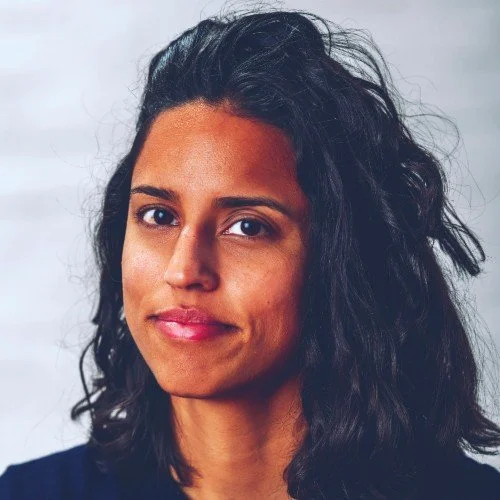
Meenal Lele, Founder & CEO, Lil Mixins
Meenal Lele (M&T’05), Founder and CEO of Hanimune Therapeutics, brings a deeply personal and systems-driven perspective to the challenge of food allergy prevention—one shaped by both scientific rigor and lived experience. Trained at the intersection of engineering, medicine, and commercialization, she is building solutions to one of the fastest-growing public health problems affecting children today. Her work is grounded in a clear mission: to create a future in which food allergies are no longer an inevitable part of childhood.
What distinguishes Lele is not only her entrepreneurial track record, but the origin of her work. The founding of Hanimune Therapeutics—and its consumer-facing brand, Lil Mixins—was driven by a real-world gap she encountered as a parent. After her older son developed food allergies, she quickly discovered how inaccessible and impractical existing guidance was for families with infants. The science was clear: early allergen exposure matters. But the system was not designed to support parents—particularly those in underserved communities—in acting on that science. That disconnect became the catalyst for her work.
Drawing on her background in the pharmaceutical and medical device industries, Lele translated evidence into scalable solutions. Lil Mixins delivers shelf-stable, precisely dosed allergen protein powders designed for early infancy, along with probiotic interventions shown to reduce eczema risk by 50%—a key driver of food allergy development. Clinical evidence demonstrates that regular early exposure can reduce the risk of food allergies by up to 97%, reinforcing a core belief behind her work: food allergy is not something we are born with, but a disease that can be prevented by training the immune system early. Beyond consumer products, Lele has positioned Hanimune to work with medical societies, payers, and public health stakeholders, with a long-term focus on expanding access for Medicaid and WIC populations—because prevention only works if it works for everyone.
Her career reflects a consistent ability to bridge science and impact. Before founding Hanimune, Lele held leadership roles across multiple healthcare startups, overseeing clinical studies, medical education, and commercialization, and guiding companies through successful acquisitions by Zimmer Biomet and Becton Dickinson. At Hanimune Pharma, she is now developing what could become the world’s first safer oral immunotherapy for egg allergy—using structurally modified proteins to induce immune tolerance while reducing risk. Together, her work represents a comprehensive approach to allergic disease: prevention, treatment, and equitable access, all grounded in data, design, and a clear understanding of how innovation must meet people where they are.
